Traveling Through Time

“Forever is composed of nows.” —Emily Dickinson

How does one weigh what is important in life against what may not be important, and make wise decisions on what to do, what to pursue, what to let go and when? How does one balance the decisions we make for ourselves with those made by other people which also affect us and sometimes have significant weight and bearing on our choices? How do we know when to ask others for help or advice, and when to simply gather ourselves and make our own decisions, whatever the outcome? Is it fair to do that when our decisions also affect other people, sometimes with a significant amount of the aforementioned weight and bearing? There are no easy answers, and we’re all just trying to do the best we can, but what if the best we can do is not enough? What then?
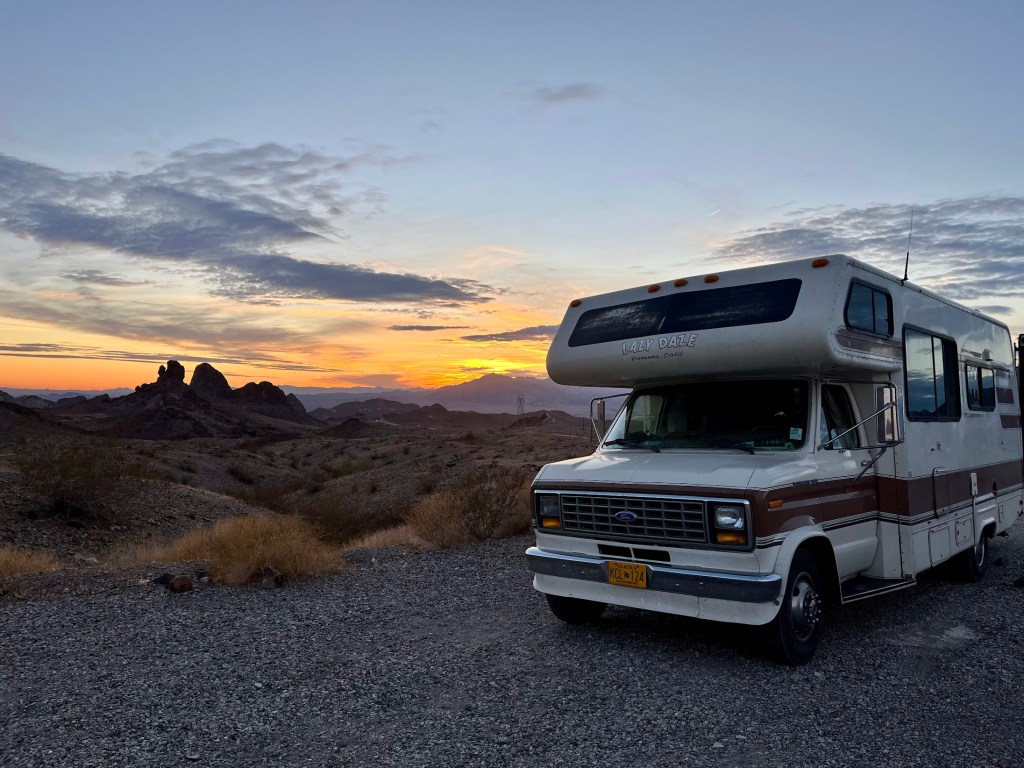
My motorhome near Lake Havasu, Arizona

As most of my readers know, I spent last fall and winter traveling from Alaska to Arizona and back again, a nine-month odyssey in my 24’ motorhome which was, like most such journeys, totally awesome at times, frustrating at other times, and a few times so sad I just sat and cried and felt helpless. In other words, life went on as life is wont to do, heedless of the fact that I often didn’t know where I would wake up in the morning, although I always knew exactly where I was. 
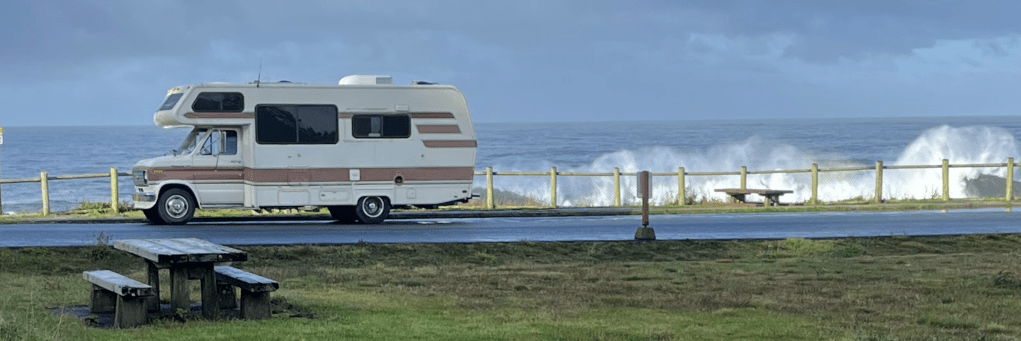
A blustery day on the Oregon coast

I wrote a few posts on Facebook sharing photos from wherever I was at the time with my family and friends, and two on SubStack, one last August and another in January, when I shared the reason for my trip—a presentation on the history of sled dogs with my dear friend and artist, Veryl Goodnight, for the Western Spirit Museum of the West in Scottsdale, Arizona. Three presentations, actually, and it was an absolutely splendid adventure in every respect! The post just before this one was written only a couple of weeks before our museum presentations last year. It’s been that long since I’ve written anything here.
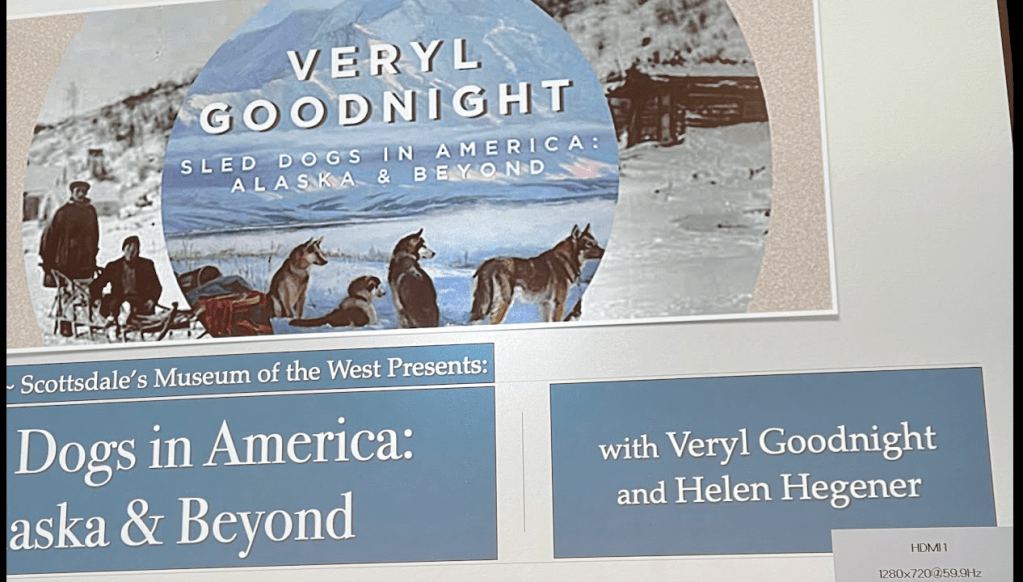
This was on the large screen in the museum’s auditorium, as we were checking the slideshow settings the day before our presentations. It was fun to see these books I’d edited and published being the center of so much joy and respect for the history!

I’m at home in Alaska now, happy to be back amongst my family and friends, but I find myself thinking about the trip a lot, wishing I’d stayed longer in one place or another, wondering why I took this road or that one at various times, and really wishing I’d spent more time visiting more of the friends I’d planned on seeing while I was Outside. Not long ago I learned one of those friends had passed away, someone who’d been very dear to me for many years, and who’d visited Alaska about 10 years ago, when we spent a delightful week exploring together—we’d both been looking forward to another such adventure, but an unexpected turn of events made me cut my trip short last spring, thinking we’d get together the next time I was Outside. 
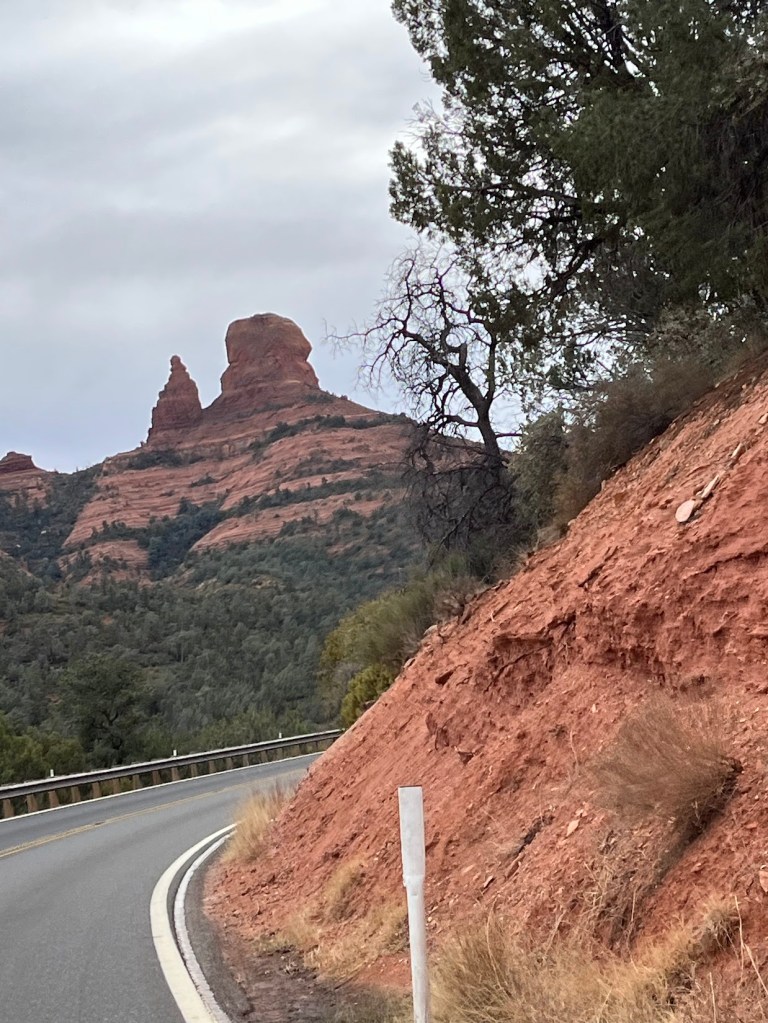
A favorite photo from my trip, exploring Sedona and Oak Creek Canyon with my friend Nina.

An opportunity missed, a friend I’ll never see again. I often think about all of the other friends I didn’t see last year, and I find myself wondering which of them will no longer be there when I go south again. Not having any idea when that trip might happen, I fear several more friends will not be there. Or maybe I won’t be here. At 76 that is also a very real possibility.
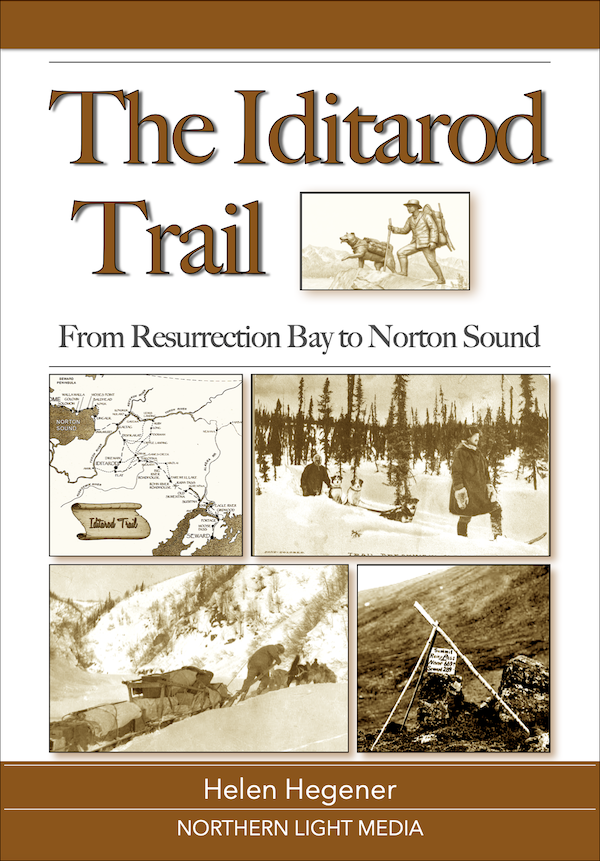
I’ve published a new book since returning, The Iditarod Trail: Resurrection Bay to Norton Sound, about the history of the northernmost Congressionally designated National Historic Trail. The book covers the history from the earliest travelers to the gold rush miners to the intrepid dog teams which carried freight, gold, and the U.S. Mail over the trail. The Iditarod Trail: From Resurrection Bay to Norton Sound, by Helen Hegener, published in March, 2026 by Northern Light Media. ISBN 9798252387352. 6” x 9” b/w format, 408 pages, over 200 photographs, indexed, bibliography, annotated references, extensive online resources. $29.95 plus shipping.

The Iditarod Trail was a fun book to write, and people keep asking me what book I’m working on now, and I don’t have an answer for them. I have lots of ideas, and half a dozen or so books in various stages of completion, and at least that many which should probably be revised and updated, such as the books about the roadhouses or the 1935 Matanuska Colony barns, but I have no idea when or if I’ll get around to any of those projects. Won’t be in the near future, as it’s almost springtime in Alaska, and that means we’re not far from the season for gardening, camping, fishing, and just exploring this beautiful state we live in. I’m looking forward to a good summer, and I hope you’ll have one too, wherever in the world you are.

Smiles, Helen
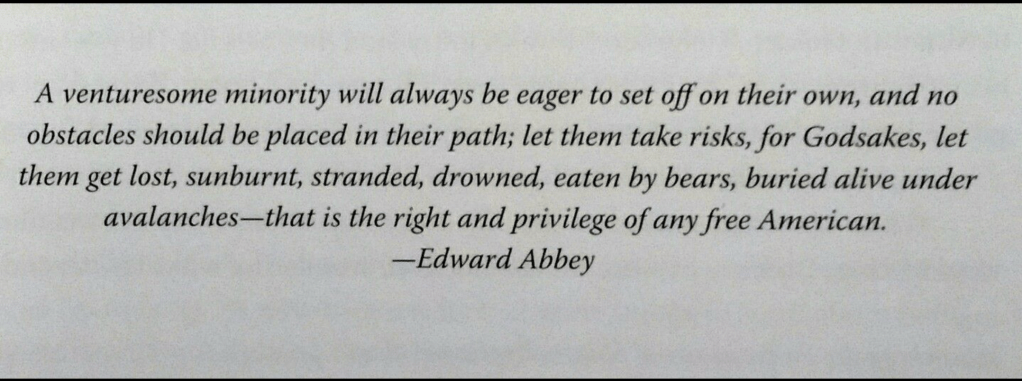
I framed this quote from a favorite author and it is on the wall in my motorhome.

Sled Dogs in the Desert

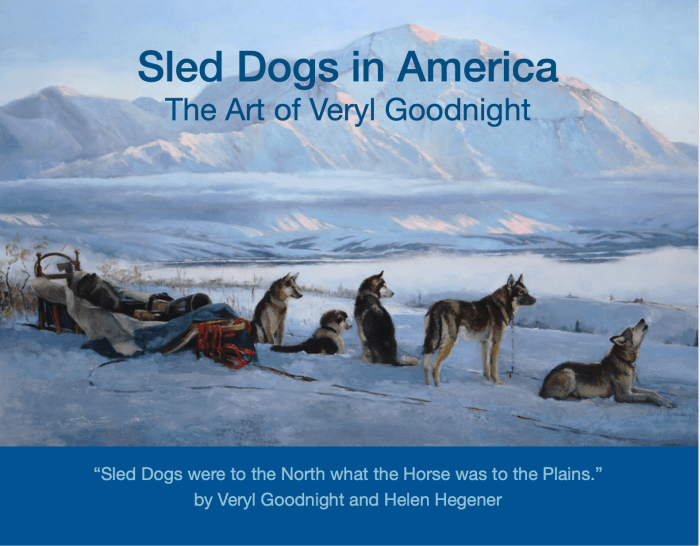
The important place of sled dogs in American history as portrayed by the amazing sled dog paintings of my friend Veryl Goodnight is the subject of the book I published in November: Sled Dogs in America: The Art of Veryl Goodnight, by Veryl Goodnight and Helen Hegener. Veryl’s historically accurate paintings have elevated the history of sled dogs to an exhibit at the prestigious Smithsonian-associated Western Spirit Museum in Scottsdale, Arizona, and Veryl and I will be giving two slideshow presentations at the museum on February 6th, followed by a reception. It promises to be an exciting event!

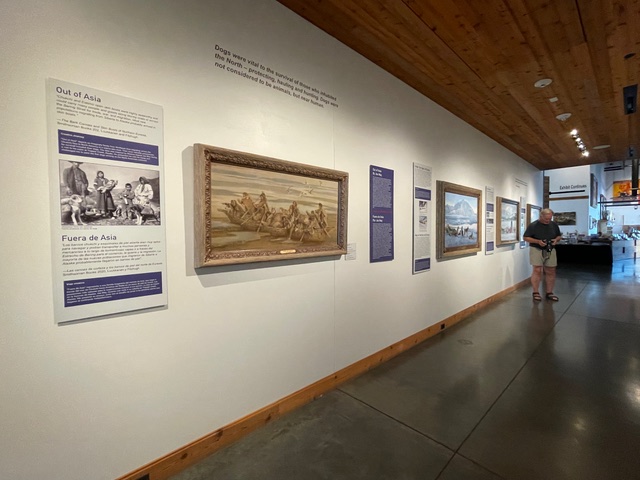
Running for nine months, through April, 2025, the unique exhibit we helped curate showcases not only the paintings done by Veryl, but includes the history behind the paintings as I researched it for my 2023 book, The History of Sled Dogs in North America. Also included are many of the props and supporting pieces Veryl used in creating her paintings.

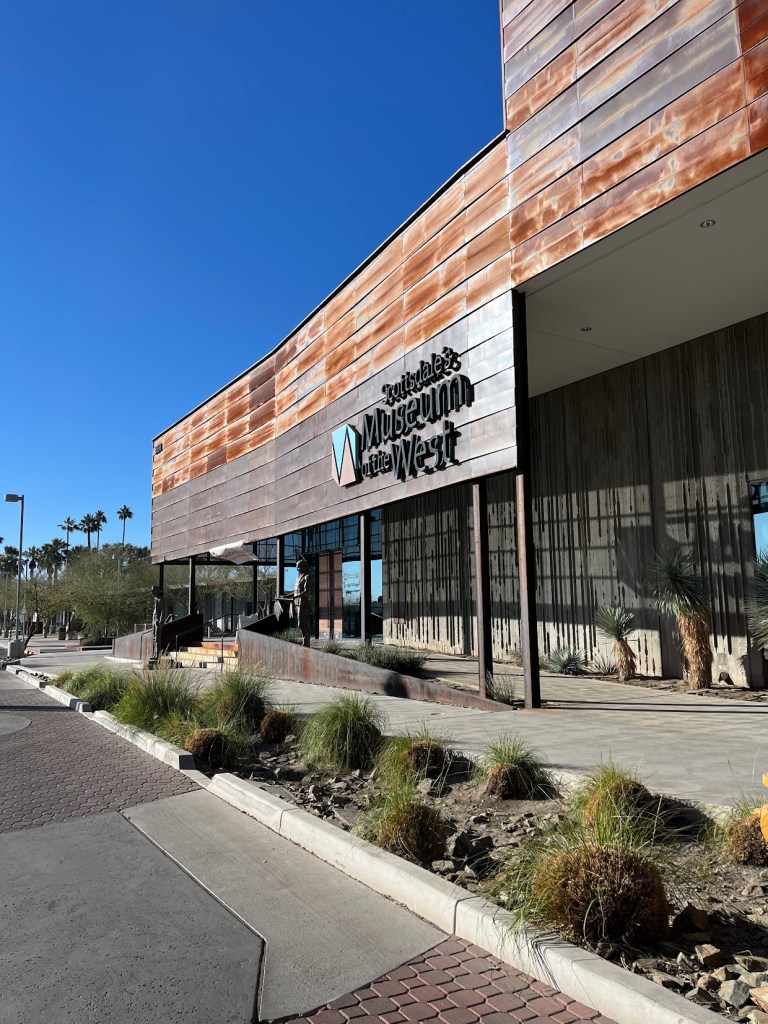
Although I’ve seen many photographs of the displays, I got my first actual look at the sled dog exhibit last week, and it was quite humbling to walk into that very prestigious museum and see my name on the walls, along with the photos I’d researched and the history I’d written!

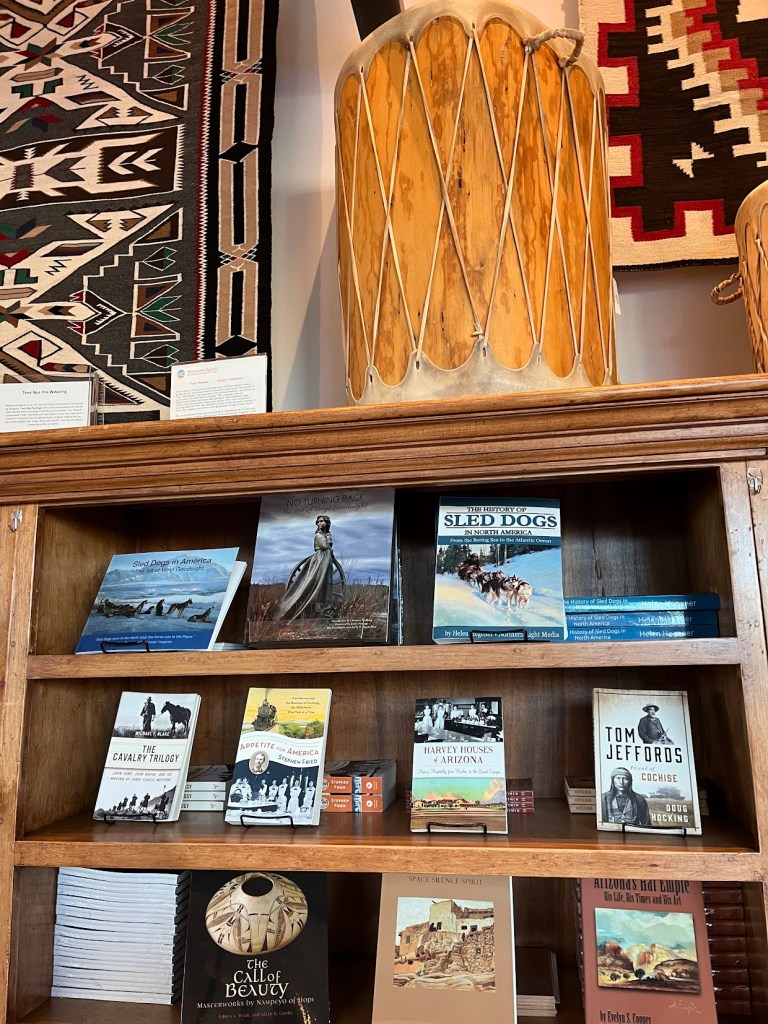
But just as thrilling was to see two of the titles published by my Northern Light Media on the top shelf of the museum bookstore!

Veryl and I signed their copies and marveled at the depth and quality of the other items for sale!

I smiled to see people walking through the exhibit carrying copies of the book Veryl and I had produced together, and it was wonderful to talk with the docents and the visitors about the history and Veryl’s beautiful artwork. Our visit last week was impromptu, but it gave us a wonderful advance look at how exciting it will be when we return to present our slideshow and talk on February 6th!


An Old Dog Learning New Tricks

Since starting my own publishing company in 2007, I have always printed my books with Amazon KDP, or Kindle Direct Publishing. Their fairly simple, almost intuitive management has been wonderful to work with. The photo-heavy format of most of my books made it difficult to create ebooks from them, which is obviously KDP’s forte, but the printing side served my purposes well for more than two dozen books.

And then one day it didn’t. I was close to the end of formatting a book last winter and decided to check something specific about margins, and I discovered  to my utmost dismay that the layout size I had chosen for this book was not an option for KDP! 

Taking a deep seat and drawing on my past experiences in publishing, I decided my best option was IngramSpark, a service of Lightning Source, which had always delivered quality printing and distribution services when I was producing books more traditionally, and not using the print-on-demand format. Print runs of thousands of copies was outside my budget when I started Northern Light Media, however, and the print-on-demand model proved to be an excellent choice, but I wanted to notch up the quality of my books, and I wanted different distribution options. To be sure, IngramSpark is a much more complicated program to work with, but I am optimistic about my ability to understand the particular hoops I need to jump through with them. I am certain that in the end I’ll be much happier with their approach to publishing than with Amazon KDP. 

By the same token, I have used the Apple program Pages to lay out and format all of my books since the beginning. It has done everything I wanted it to, and by creating my own templates, with my own pre-formatted settings, I’ve been able to produce books which checked all of the boxes I felt were important. But times change, I learn more and more as I go along, and I was no longer satisfied with the results I was getting with the Pages program. So I looked into, and have been learning, the page layout and design software Affinity Publisher. Once again my past experience as a publisher has informed my decision, for I found similarities between Affinity and the QuarkXpress program I first learned layout and design with back in the 1980s, and understanding the basic principles of layout and design, fonts and styles has made the whole learning process easier.

So far I’m pretty pleased with Affinity, although I still have a long way to go before entrusting my newfound skills with it to one of my books. If all goes well, however, I may be switching all of my books over to this program, and revising several of them in the process.

After 17 years as a publisher it feels strange to be making these transitions to a new layout program and a new printing and distribution company, but at the same time it feels like leaving high school and going off to college, taking the skills I’ve learned and applying them to further learning, which will result in even more skills and a greater confidence in my abilities and achievements. 

Checking Back In

It has been several years since I posted anything on this site–my personal weblog–and I thought this might be a good time to catch up with my readers, my friends, my family, and everyone interested in my books and my writing life. A lot has happened since 2016, almost ten years! I’ve published many books since then, started a magazine and lost it to the pandemic, started another magazine which is gaining new readers with every issue, and I’ve added the excellent books of several writers to my Northern Light Media booklist.

I think maybe the best way to re-start this blog might be to share the ‘About Me” which I just edited. It’s on the left side of the site, but for those reading on their phones, who may not see that without some fiddling around, and for anyone seeking details about my creds for whatever reason, here ’tis again:

I am an author and a publisher, and through my company, Northern Light Media, I’ve published many nonfiction books about the history of Alaska, the railroads, roadhouses, revenue cutter service, gold rush history, and historic sled dog races. I’ve volunteered for many sled dog races, including the Yukon Quest, the Northern Lights 300, and the Copper Basin 300, and I have designed and managed the websites for the Northern Lights 300, the Top of the World 350, and the Copper Basin 300. I also organized and sponsored two Mushing History Conferences, in 2009 and 2010, which drew presenters and attendees from across Alaska and Canada.

I have given presentations about my books all across Alaska, and I have written articles for Alaska Magazine, Last Frontier Magazine, and Mushing Magazine, among others, and I created and wrote the Team and Trail column for Alaska Dispatch News for a few years. I have given slideshow presentations at the Alaska State Fair, the Palmer Historical Society, the Talkeetna Roadhouse and many other venues. A profile of me and my publishing company by Alaska historian and book reviewer David A. James can be read at this link, or the original article, dated January 5, 2024, is at the Anchorage Daily News.

The success of my own books led others to entrust me with the publication of their books, and Northern Light Media now has over two dozen books in print, with authors such as Lew Freedman, Anne Winters, Veryl Goodnight, Jody Meanus, and the late professor Gary C. Stein, who was recognized last year by the Alaska Historical Society for his work as an Alaska historian in the 1970s and 80s and his service as AHS president. He published numerous articles and book reviews in the Society’s journal and published his seminal work, on Dr. James Taylor White of the U.S. Revenue Marine Service in Alaska, with Northern Light Media in 2021.

You can contact me on Facebook, or write to me at my email address: helenhegener@gmail.com

‘Tis the Season

14199635_10210501830807078_4700779490522587882_n
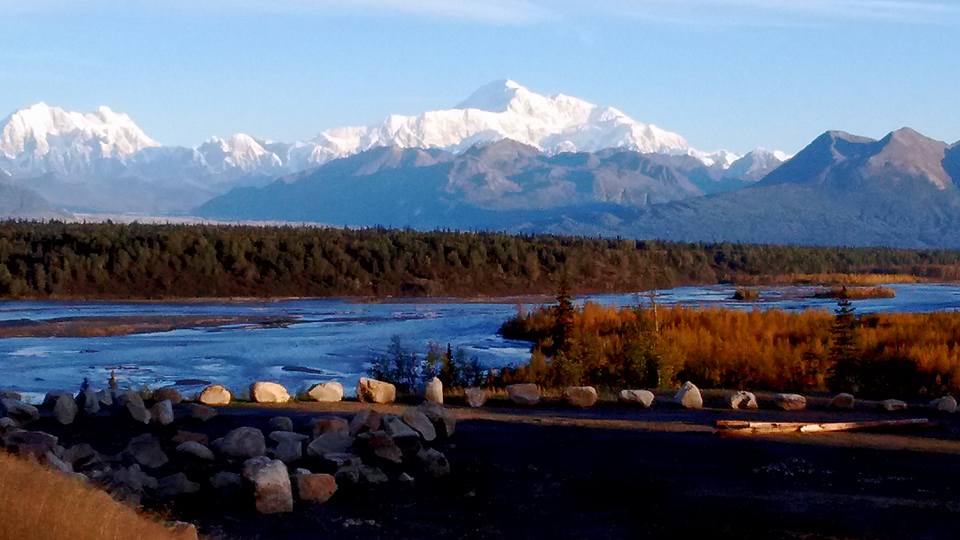
Denali, taken from a friend’s place in late summer. [Northern Light Media photo]
I dropped this blog from my website back in June, knowing I wouldn’t have the time to update it during our busy Alaskan summer, and sure enough, it has been only recently that I’ve written new posts for my Northern Light Media website, three or four already in the past week or so. That’s the difference between Alaskan summers and going into our long winters. Summer is the time to explore, to fish and pick berries and to travel around just taking in the glorious beauty of our magnificent state, and I did all of those in abundance.

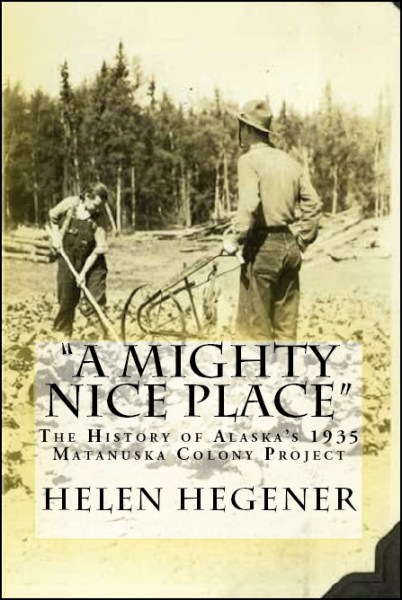
a-mighty-nice-place-coverFall and winter, on the other hand, are times for slowing down, gathering in, and reflecting on many things. Our lives, living in Alaska, those who lived here before us…. I recently finished editing a new* book, “A Mighty Nice Place,” which explores the Matanuska Colony Project history, and how that affected the lives of 200 midwest families, and the pioneers who were here before they arrived, and the legacies both groups left to those living in the Matanuska Valley today, as my family does. It’s a story I find endlessly fascinating, and will probably revisit again and again.

[*Note: “A Mighty Nice Place” combines two earlier titles, ‘The 1935 Matanuska Colony Project’ and ‘The Matanuska Colony Album,’ into one volume.]

Book Reviews

Screen Shot 2016-06-12 at 9.55.34 PMAuthors always love to see book reviews, and this author is no exception. With a dozen titles currently in print I’ve seen quite a few reviews, but I still smile when one crosses my path, as this review of my latest book, Alaskan Sled Dog Tales, did earlier this week. David Fox gave my book a very nice review for the Anchorage Press, writing: “Relying upon material written from the late 1890s through the early ‘30s, she catalogues how sled dogs provided Alaskan residents the ability to traverse enormous distances, deliver critical supplies and maintain communication from within and outside Alaska. The episodes she recounts are stirring, filled with human and animal bravery. Some are simply mind-boggling, filling the reader with awe and enormous respect for dog and driver alike.”
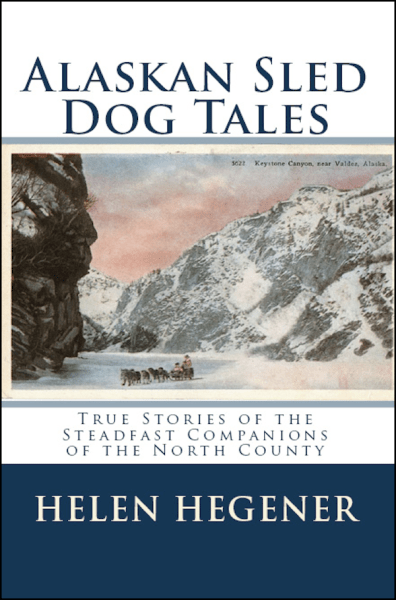
Ak SD Tales coverYeah, that nicely captures what I set out to do with this book! David Fox shares some examples from my book, and then leaves me grinning with his parting shot: “These trustworthy creatures could be relied upon to do the heavy work, while remaining—as Hegener eloquently reminds us—our most treasured friends.”
Did you see he used that grand word “eloquently?” The Merriam-Webster Dictionary defines eloquent as “having or showing the ability to use language clearly and effectively; clearly showing feeling or meaning.”

I’m grinning all over again. Thank you, Mr. Fox!


Booksigning

Fireside Booksigning
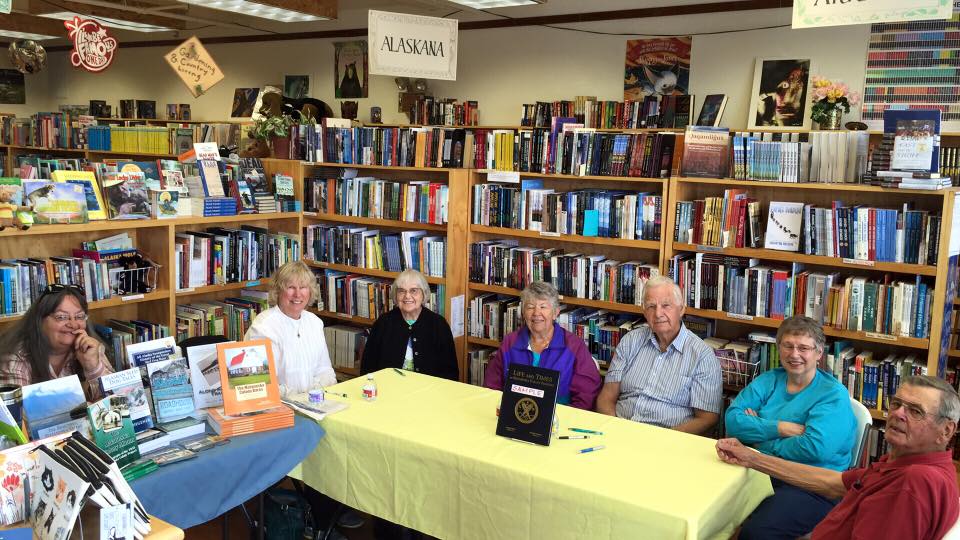
Booksigning at Fireside Books, photo by David Cheezem, owner.

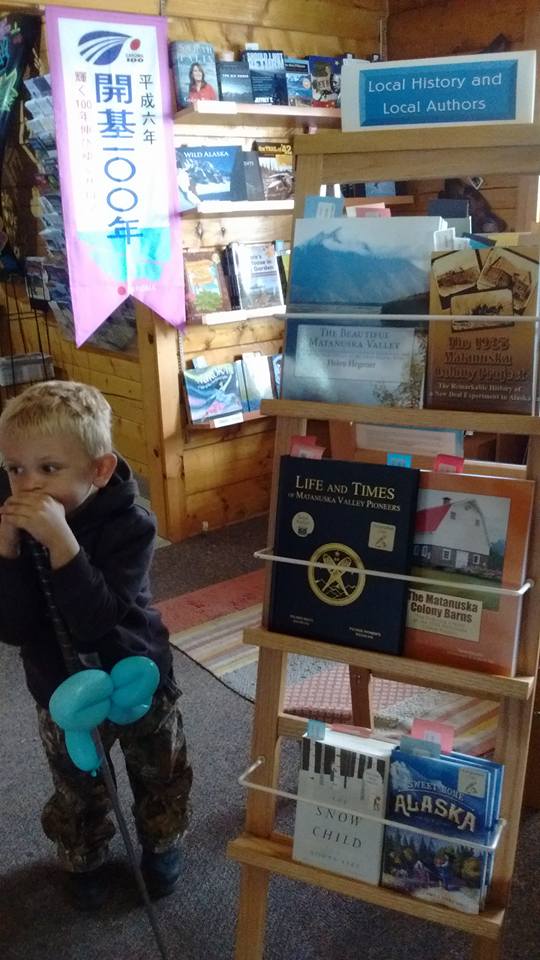
It’s always fun and interesting to take part in book-related events, and I always learn a little more about the history my books touch upon when people who are familiar with those histories – or who lived the history – introduce themselves and we strike up a conversation. That happened several times on Friday when I took part in a four-hour booksigning at my favorite bookstore, Fireside Books in Palmer, highlighting my books about the 1935 Matanuska Colony Project. Also there for the booksigning were several Matanuska Valley pioneers and Sharon Benson, the co-author of another great book, The Life and Times of Matanuska Valley Pioneers.

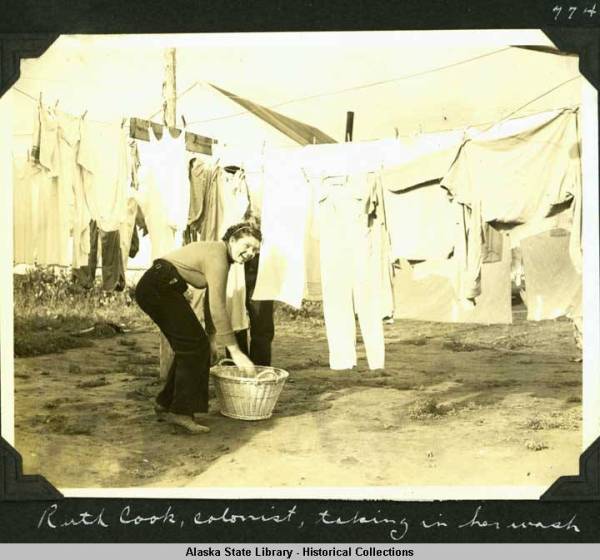
188. Ruth_Cook_colonist_taking_in_her_wash
Ruth Cook, Colonist, taking in her wash. Photo: Willis T. Geisman, 1935.

The history of Alaska and the Matanuska Valley are really nothing more than the compilation of individual stories, whether those stories are thrilling and adventurous or more mundane and everyday. Each person simply going about their daily lives contributed (and continue to contribute) to the whole which we know as history, and when people start talking about their own personal histories, or those of their family members, friends, or even just people they’ve known, the entire process of history-making is given a clarity which I always find fascinating and rewarding. It’s one thing to write about the design and construction of the Colony barns, but quite another thing to have someone tell about working in one, milking cows and loading hay into the hayloft one summer forty years ago.

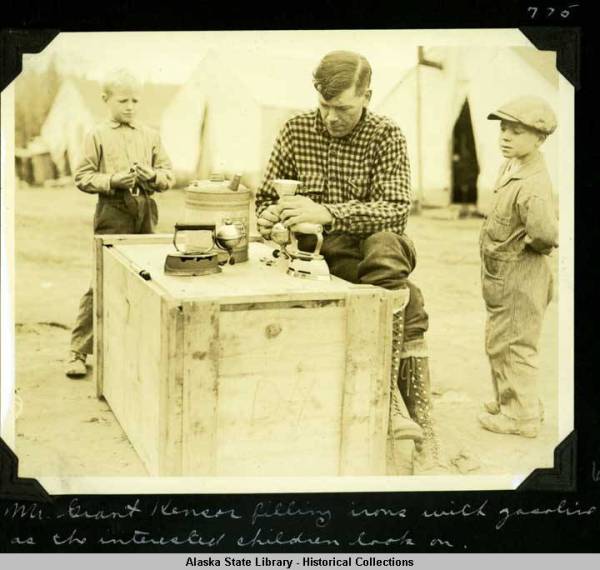
189. Mr_Grant_Kensor_Kenser_filling_irons_with_gasoline_as_the_interested_children_1ook_on
Mr. Grant Kensor filling irons. Photo by Willis T. Geisman, 1935.

During the writing of my book on the Colony Project I was able to access the original records at the National Archives office in Anchorage. The office has now been closed, and the records have been moved to the National Archives office in Seattle. Toward the end of the day on Friday a young couple came into the bookstore and I learned that the young man’s parents had been Colonists, and sure enough, we found their name and tract number in my books. I explained about the original files for the Colony families being at the National Archives, which sadly had been moved to Seattle – and learned that the couple lived in Seattle and were only visiting friends in Palmer! They were very excited to learn how they could research their family’s history upon their return to Seattle!

The day after the booksigning I was walking around Palmer’s Colony Days celebration with my grandson Collin and was excited to see four of my books featured at the local museum and visitor’s center. Collin was patient with me in the museum, but it’s not hard to see that he was more than ready to get back outside to the “good stuff” again!

Collin and my books


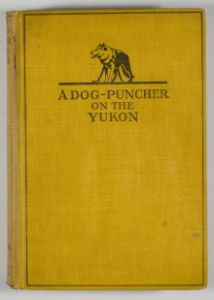
Dog-Puncher on the Yukon

Dog-PuncherPeople sometimes ask which musher is my favorite – speaking of the old-timers, not my currently-racing friends. It’s a tough choice, as there were some amazing mushers in Alaska’s history (and I write about many of them in my newest book, Alaskan Sled Dog Tales), but one which is always near the top of my list is Arthur Treadwell Walden, author of “Dog-Puncher on the Yukon.” Here’s an article about him, and a great photo which I don’t remember seeing before:
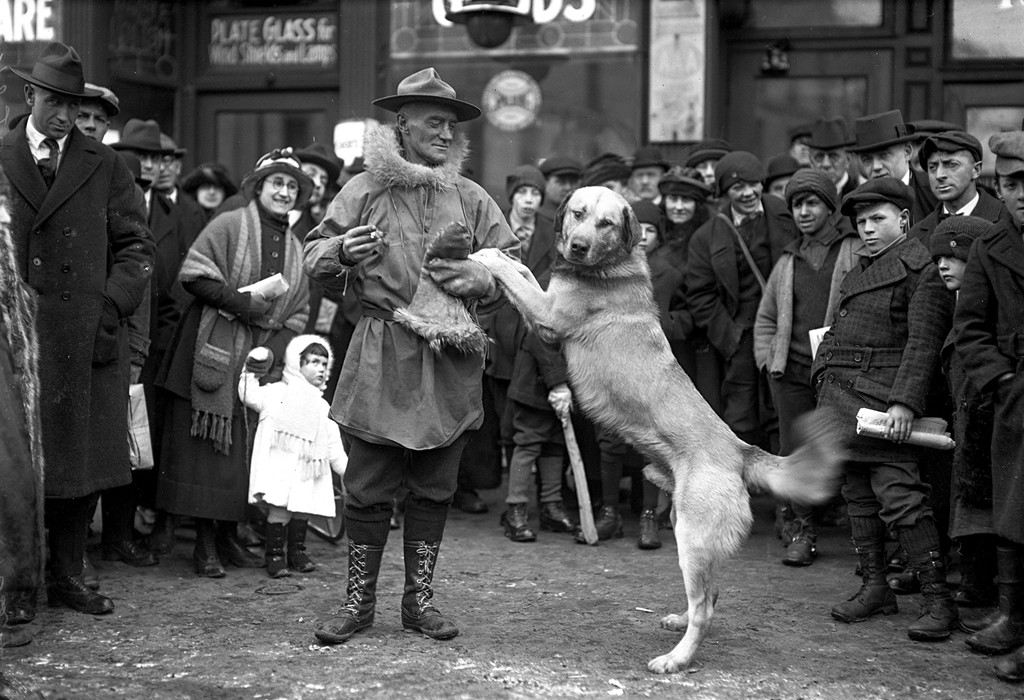
Walden and Chinook

“Part adventurer, part showman Arthur T. Walden of Wonalancet, New Hampshire, dazzles the crowd with his sled dog Chinook at the Winter Carnival in Portland in this photograph published on the front page of the Evening Express on February 11, 1922, the same year that the intelligent, loyal canine led Walden’s team to victory in the first Eastern International Dog Derby, a 123-mile race. Then 5 years old, Chinook, bred from a mastiff stray and a descendant of Admiral Robert Peary’s Greenland husky Polaris, was on his way to becoming the most famous dog in America. His future achievements would include leading the first dog team ascent of Mount Washington, a treacherous undertaking that many had considered impossible.”

Read more at this link.


Fragility

Screen Shot 2016-04-29 at 9.09.34 AMI am not used to being fragile. I’ve been through car crashes, fallen off cliffs, thrown from horses, slipped on ice, and once had a mineshaft start collapsing while a friend and I were exploring, but all in all I’ve been lucky and have escaped major injuries in this lifetime. But two bad falls this week have left me sore and bruised and feeling rather shaken. Their sudden unexpectedness has left a grim reminder that we aren’t always in control of everything, and as they say, stuff happens.

cautionThe first accident happened in – of all places – the local emergency care facility. My grandson and I were waiting in the car for his mom, and after a while the little fellow needed to use their restroom, so we were making our way across the parking lot when an uneven spot in the pavement tripped me up and I went down, hard. That bruised both knees and my wrist, and all three are still sore several days later.
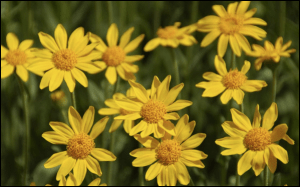
The second incident happened yesterday as the same grandson and I were shopping. He was being playful and dodging around me, I reached to grab him up, missed, and hit the floor sideways, landing on my shoulder. I didn’t think much of it at the time, but a couple of hours later I couldn’t raise my arm over my head, and by late last night there was an unmistakable ache telling me something got bruised or worse.

arnicaThis morning I am limping, gimping, and having trouble raising more than a coffee cup. Arnica is my friend, and I’m going to invest in a heating pad since I loaned all of mine to others in need many years ago. Meanwhile, there’s a quote by Mark Twain, one of my favorite authors, about accidents.
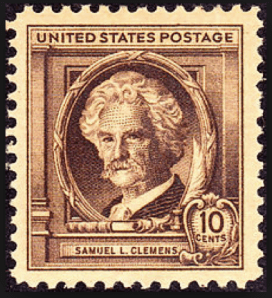
Screen Shot 2016-04-29 at 9.50.20 AMI only dimly remembered how it went, so I looked it up online: “There are no accidents, all things have a deep and calculated purpose; sometimes the methods employed by Providence seem strange and incongruous, but we have only to be patient and wait for the result: then we recognize that no others would have answered the purpose, and we are rebuked and humbled.” That quote is from “The Refuge of the Derelicts” published in Fables of Man, which was written in 1909. Knowing the context, I don’t think Twain had silly stumbling falls in mind when he wrote that, but no matter, it makes me feel better to think that perhaps there’s a reason for my accidents, even if it’s only message from the universe to slow down a tad.


Denali

Screen Shot 2016-04-25 at 8.16.49 AM
We are experiencing technical difficulties

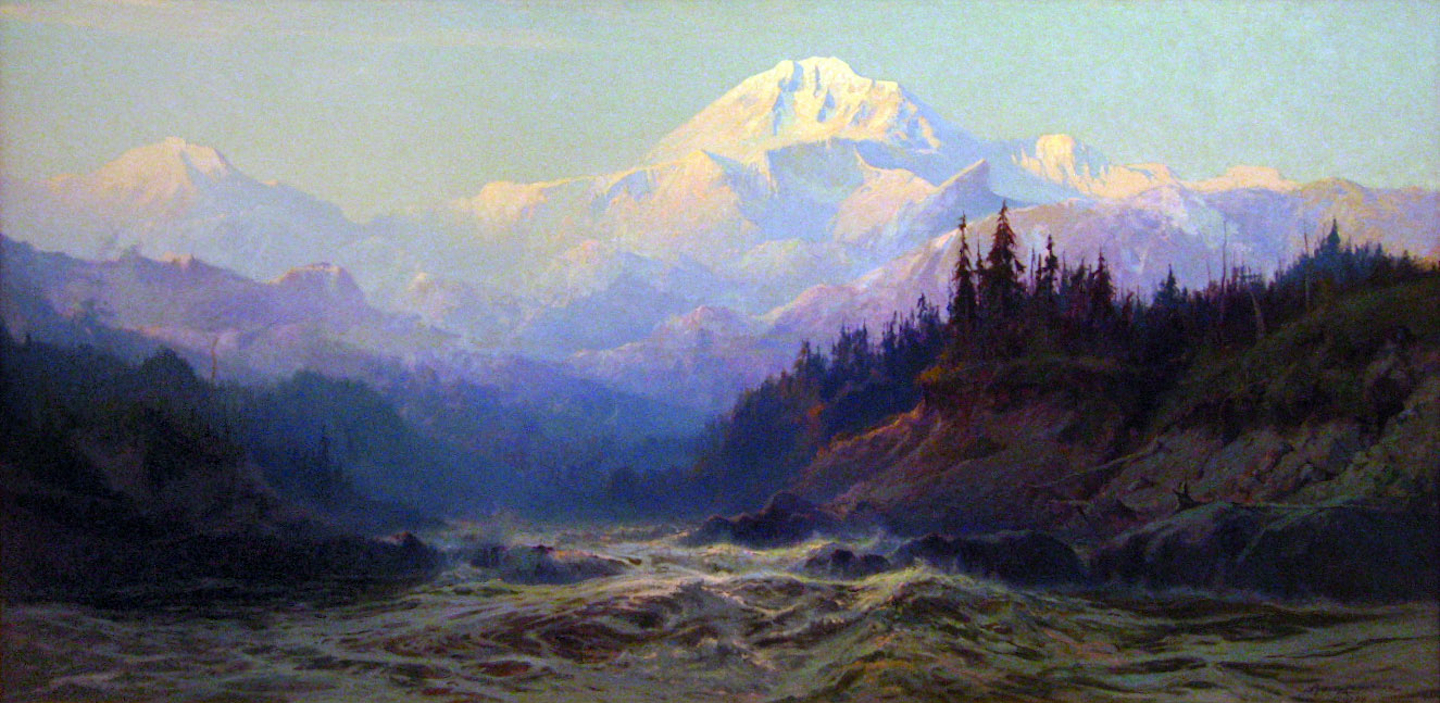
Yesterday I spent an hour or so trying to get the header photo to look right on this blog, and this morning it still looks like the top of Denali is chopped off by the top of the frame. The specs call for an image 1440 x 600 pixels, which is what I put up there originally, but after several attempts the current image is around 1200 x 400 pixels and still doesn’t look right. I tried cropping the image, framing the image, reloading the page, and all the other tricks I’ve learned over the years to make technology cooperate, but the answer to this mystery still eludes me. So here is the image as it should appear:

Painting_of_Mt._McKinley_by_Sydney_Laurence

This is one of my favorites by Alaskan artist Sydney Laurence, titled ‘Mount McKinley from the Rapids of the Tokositna River.’ This image is in the public domain.

Screen Shot 2016-04-25 at 8.11.53 AM
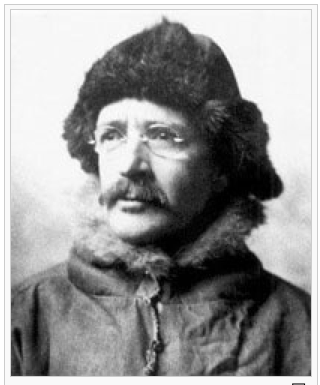
Sydney Laurence 1914

The Tokositna River marks the southeast corner of Denali National Park, and this image of Denali as viewed from the hills above the rapids of the Tokositna River became Sydney Laurence’s trademark. He painted many different renditions of the view, and it is this image more than any other which personifies Laurence for his many admirers and collectors.

If you’d like to see this view for yourself, a friend of my mother’s, gold miner Dennis Garrett, has provided an excellent free online access guide to the area, which is off the Petersville Road northwest of Talkeetna: “A very nice trail takes off from here, and by following it for a mile or so, you can overlook the Tokositna Valley and Glacier, the Tokosha Mountains, and of course, Denali, the ‘Great One.’ (aka Mt. McKinley) In the 1920s, the world-renowned Alaskan artist Sydney Laurence painted from this vantage point.”